Copper peptides (GHK-Cu)
Peptide serums · 'collagen in a bottle' claims
GHK-Cu serums ride the wider 'peptide' wave on TikTok and Reddit, where blue serums, DIY mixing videos and debates about whether copper 'cancels' vitamin C fill the comments.
A sensible layer for a face that cannot take retinoids; not collagen in a bottle, which does not exist.
Reviewed against the Aesthetics International standard. Category: Skincare.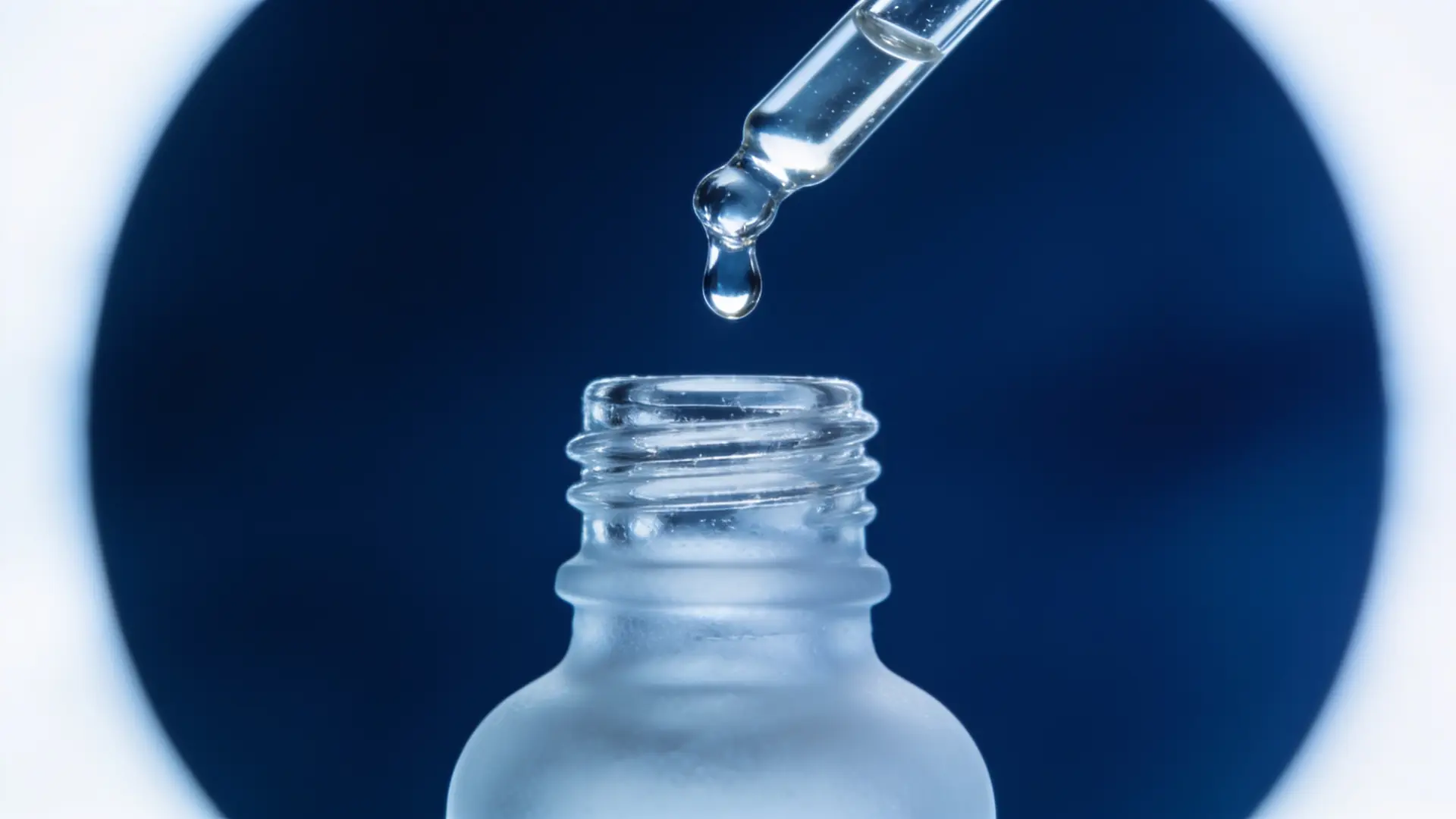
Does Copper peptides (GHK-Cu) work?
Promising. A sensible layer for a face that cannot take retinoids; not collagen in a bottle, which does not exist. The laboratory and gene-expression literature is substantial and consistent.
- Verdict
- Promising Plausible mechanism and early evidence. Reasonable to try with realistic expectations.
- Evidence base
- 4 PubMed-indexed studies cited below, including systematic reviews.
- Suits
- People who cannot tolerate retinoids and want a gentle, plausibly useful serum; post-procedure recovery as an adjunct.
- Not for
- Anyone expecting a retinoid-level change or a 'natural filler'. It does not add volume or lift, and it is not a reason to skip proven treatments.
- In Singapore
- GHK-Cu serums are notified cosmetics in Singapore.
- Category
- Skincare
- Reviewed
- 1 October 2026 by Aesthetics International. Revised as evidence and regulation change.
What it is
GHK-Cu is a naturally occurring tripeptide (glycyl-L-histidyl-L-lysine) bound to copper, found in plasma and released from damaged tissue. In skincare it is sold at low concentrations in serums and creams, often with a blue tint, and marketed for firmness, wound healing and hair.
How it works
In cell culture and animal work GHK-Cu switches on genes for collagen, elastin and glycosaminoglycan synthesis, modulates matrix metalloproteinases and recruits repair cells, which is why it has a real history in wound-healing research. Whether a cosmetic serum delivers enough peptide through intact stratum corneum to matter is the open question; penetration of a charged, water-loving molecule is poor without a delivery system, and products vary enormously.
What the evidence says
The laboratory and gene-expression literature is substantial and consistent. Human clinical evidence is thin: a 2019 systematic review of matrix-stimulating peptides in cosmetics found few well-designed trials, most small and sponsored, and a 2026 meta-analysis of peptide RCTs reports modest improvements in wrinkle and elasticity measures across heterogeneous products. There are no good head-to-head trials against retinoids. The 'vitamin C conflict' is a plausible chemistry concern rather than a demonstrated clinical problem.
What people are saying
Paraphrased from public discussion on TikTok, Instagram, Reddit and in the press. Not testimonials, and not about any one clinic. Reported in: westlakedermatology.com.
What the studies show
- systematic review
Few cosmetic peptides, GHK-Cu among them, had published controlled human trials, and most available studies were small or industry-sponsored.
Peptides stimulating synthesis of extracellular matrix used in anti-ageing cosmetics: Are they clinically tested? A systematic review of the literature — Australas J Dermatol, 2019. PMID 30941744.
- review
GHK-Cu modulates expression of many genes involved in tissue repair, collagen synthesis and antioxidant defence in laboratory models.
Regenerative and Protective Actions of the GHK-Cu Peptide in the Light of the New Gene Data — Int J Mol Sci, 2018. PMID 29986520.
- systematic review
Pooled RCTs of peptide interventions showed modest improvements in wrinkle depth and elasticity, with heterogeneous products and short follow-up.
Oral and topical peptides for skin aging: systematic review and meta-analysis of randomized controlled trials — Front Med (Lausanne), 2026. PMID 41924746.
- review
Topical GHK shows promise for wrinkles in limited studies, but poor skin penetration and stability remain unresolved formulation problems.
Topically applied GHK as an anti-wrinkle peptide: Advantages, problems and prospective — Bioimpacts, 2025. PMID 39963574.
Studies are selected for relevance and quality, not for agreement with the verdict; PubMed records are linked so the reader can check them.
Who it suits
Suits
People who cannot tolerate retinoids and want a gentle, plausibly useful serum; post-procedure recovery as an adjunct.
Not for
Anyone expecting a retinoid-level change or a 'natural filler'. It does not add volume or lift, and it is not a reason to skip proven treatments.
Alternatives
The two reviewed treatments most often weighed against Copper peptides (GHK-Cu), on the same standard.
| Copper peptides (GHK-Cu) | Niacinamide | Retinoids | |
|---|---|---|---|
| Verdict | Promising | Established | Established |
| What it is | GHK-Cu is a naturally occurring tripeptide (glycyl-L-histidyl-L-lysine) bound to copper, found in plasma and released from damaged tissue. | Niacinamide is vitamin B3 in its amide form, a water-soluble ingredient used at two to ten per cent in serums and moisturisers. | Retinoids are vitamin A derivatives applied to the skin. |
| Evidence base | 4 PubMed-indexed studies cited below, including systematic reviews. | 3 PubMed-indexed studies cited below, including randomised trials. | 4 PubMed-indexed studies cited below, including systematic reviews, randomised trials. |
| Suits | People who cannot tolerate retinoids and want a gentle, plausibly useful serum; post-procedure recovery as an adjunct. | Almost everyone: oily, blotchy, acne-prone or barrier-compromised skin, and as a tolerable companion to retinoids and acids. | Adults with acne, fine lines, uneven texture or sun damage who will use it most nights for months; it is the base layer most clinic plans sit on. |
| In one line | A sensible layer for a face that cannot take retinoids; not collagen in a bottle, which does not exist. | It will not change a face, but it makes everything else in the routine easier to tolerate, which is worth more than most hero ingredients deliver. | The mistake is not choosing the wrong retinoid; it is quitting in week three. |
Risks
Topically, low: occasional irritation or allergy. Injected or home-mixed peptides bought online carry infection and contamination risk and no quality control.
In Singapore
GHK-Cu serums are notified cosmetics in Singapore. Injectable GHK-Cu is not an approved product and should not be injected; confirm any product's HSA status with the provider.
“A sensible layer for a face that cannot take retinoids; not collagen in a bottle, which does not exist.”
Vetted protocols on the same problem
Questions
Do copper peptides work?
Can I use copper peptides with vitamin C?
What about injectable GHK-Cu?
Cite this review
Aesthetics International (2026). Copper peptides (GHK-Cu): does it work? Evidence, risks and verdict. https://aesthetics-international.org/treatments/copper-peptides-ghk-cu/ (reviewed 1 October 2026).
Editorial, unpaid and independent of any manufacturer. Verdict: Promising. See what works and what doesn't across all 153 reviews. Spotted an error or a newer study? Suggest a correction — changes are logged on the corrections page. Terms are defined in the glossary.
Where this review is used
Have a question about this treatment?
Ask us — or ask to be matched with a practitioner in Singapore who follows evidence-based treatment. Whether it is right for you is decided at an in-person assessment, not by a review; sometimes the answer is a different treatment, or none.
WhatsApp +65 8023 7170Suggest a treatment to review
Physicians, manufacturers and readers can propose a treatment for review. Reviews are editorial and are not paid for.
[email protected]